母国語を身に着けるのと同じ過程で英語を学びませんか?
人間の脳は成長とともに聞きなれない音(外国語)を聞き取る能力が失われていくため、学齢期になると音声言語の習得がどんどん難しくなります。母国語の習得と同じように音声で言葉を吸収する最適な時期は0歳~2歳です!お子様に楽しく英会話デビューさせてみませんか!
2歳児クラスからは「保護者の方と一緒のクラス」or「お子様だけのクラス」をお選びいただけます。
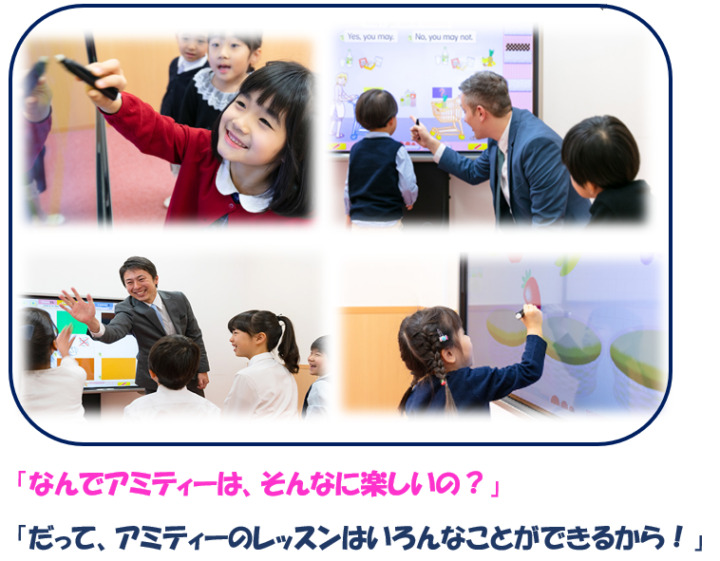
アミティーでは、少人数制グループのほか、お子様と講師、一対一のマンツーマンレッスンもございます。
お子様の性格やペースに合わせ、最大限力を伸ばすことができるマンツーマンレッスンはとても人気です!
「英語を好きに、得意になりたい」方、ぜひご相談ください!
The danger of mass corn growth
Corn is a very commonly grown vegetable. It is a staple food and used in many households and cultures. Aside from being eaten in its natural form, corn is also processed into many different foods.
The number of corn crops tend to heat the region that it is growing in, in simple terms, corn is affecting the weather. Corn plants release a lot of water into the air, this tends to make hot areas more humid which can make the temperature feel warmer. Residents in these areas are usually very uncomfortable with the change in temperature and high humidity levels. In some cases, corn sweat can raise the humidity so high that it becomes dangerous for farmers to be outside for long periods of time.
Most people have heard tales of the gladiators of Ancient Rome. Men and women (yes women, too) fighting for their lives in an arena. The inclusion of wild animals such as wolves and lions.
All of this has been exaggerated by Hollywood movies and media. The gladiators in Rome actually did not die as often as we believe, in fact gladiators were more like pro wrestlers. The crowds loved to witness the fights and feats of strength but it the fights rarely were to the death.
Female gladiators were also quite common but this was usually by their choice. Most women looked for independence and a chance to make their own money and fame. As a result, they became gladiators to indulge in the fame and excitement.
Revenge is a somewhat common phenomenon found in cultures all around the world, it is also seen in different species with higher levels of intelligence such as Apes, killer whales, elephants and dolphins.
Older psychological theories believed that revenge was a means of getting over a situation or releasing anger and negative emotions. More modern studies state that revenge can be counter productive and is more likely to increase ones negative emotions about a situation. It seems it is actually better to forgive and forget.
Historically speaking revenge has never been the best idea but some studies in human evolution and society state that revenge is actually a biological mechanism. Our human ancestors faced many different threats such as theft or murder and getting revenge not only discouraged others from attempting the same harm but I am sure it probably made them feel a lot better about the situation.
英語は「言語」。ですので、環境さえ与えてあげれば誰しも必ず習得できます!
お子様にとって「適切な」環境であるかどうか、これは重要なポイントになっていると思います。
「英語=当たり前」にしてあげるために、適切な英語学習環境で早い時期から英語に触れさせてあげましょう!
お問い合わせお待ちしております✨
Japanese traditional food does not have very many sweet treats. Dango is a sweet and chewy filled dumpling that is common in all parts of Japan. These sweets are often filled with red bean paste, lotus root or more modernly chocolate and ice cream. They have cultural significance and are eaten during different holidays and as a way to celebrate customs.
These desserts are actually quite the experience, they have the texture of a soft gummy candy and are never too sweet. They can be enjoyed as a light dessert or even a snack. There is a huge variety ranging from sweet to salty and are all uniquely good.
Seeing the wood for the trees
There are two English phrases that overlap in meaning, 'not seeing the wood for the trees' and 'step back and take a look at the bigger picture'. The former entails that focusing on the finer details will have you missing out on what is really important, if you are too close to a tree you will only see it as wood. In doing so you are missing out on the forest behind it. The second phrase encourages people to look at the entire situation as a whole, not focus solely on the details.
As stated before, many countries around the world have different customs and ways of doing things. One custom I am particularly fond of, though the origin is a bit difficult to pin point, is the custom of using broomsticks as an indicator of when guests have over stayed their welcome.
It is very much passive aggressive in a sense. When guests arrive the broom is placed right side down, with the bristles touching the floor. Company is shown that their presence is not only welcome but appreciated. When the host feels that the guests have been present for too long they would flip the broom so that the bristles are pointed towards the roof of the house. This does not have to be in view of the guests but the act of doing it is said to immediately notify guests that it is time to leave.
Not all people buy into this but it is common knowledge enough that when it is done, even subtly, guests are meant to make a quick departure.
My culture has a different way of doing this but the idea also involves cleaning. My family simply starts cleaning when unwanted guests refuse to leave. Symbolically I suppose it means that the hosts are cleaning out "unwanted trash" but realistically no one wants to help clean and usually find an excuse to leave shortly after.
'Easier said than done.'
English speakers use this when the task that needs to be completed is more difficult than it seems. It is easier to talk about the solutions to the task than to actually complete the task.